
In 2024, for the first time in a decade, automated traffic overtook human traffic on the internet. It comes from Imperva’s 2025 Bad Bot Report, and the 2026 edition of the same report, now published by Thales, shows the trend hasn’t slowed: bots made up 53% of all web traffic in 2025, and 40% of all traffic came from malicious bots.
If you run software, talent acquisition, employer brand, or people analytics, this might feel familiar. Every page view number you’ve been handed in the past few years, ours included, was counted on a web that was getting less human by the month.
As AI evolved, the web changed for all of us
A lot of the new traffic is AI. Large language models, the systems behind tools like ChatGPT, crawl the web to train, and they crawl hard. In July 2025, Cloudflare, a company that carries a large share of the world’s internet traffic, measured one AI company’s crawler reading roughly 38,000 pages for every single visitor it sent back. Google’s original search engine, for comparison, was about five to one. Re-iterating what Thales found in the research I quoted earlier, Cloudflare also reported that more than half the traffic on its own network is no longer human in September 2026,
Careers sites, job boards, and employer profile pages are not exempt. Every role you post and every policy you publish is read by machines, many times over, before a person ever sees it.
What that does to the numbers HR teams get
The traditional approach was simple: every time your website page was opened on a screen, that counted as a view. Opened twice by the same person, two views. Opened by a thousand AI crawlers that read job ads to build their models, a thousand views.
That means that a page view might be from a person, a bot, or the same person for the third time, and as AI crawlers got more advanced, traditional measurements can’t always tell you which on is which.
It’s the careers fair problem: if you count everyone who walks past your stand, you can’t tell the person who stopped to ask about your flexible work policy from the one who just wandered past three times on the way to the coffee. Online it’s worse, because half of what walks past isn’t a person at all. A count that can’t tell them apart stops measuring reach and starts measuring noise.
If you’ve ever looked at a reach figure and thought “no way that’s all people”, you were right. Now you know it’s not.
To give you better insights, we changed how we count
Earlier this year we realised our insights and page view data had become a lot less precise than we wanted it to be. It overlooked a percentage of bots, and counted the same visitor more than once. Those numbers were produced in good faith with the tools we had – but had to evolve for the way the world’s web traffic had evolved with the acceleration of AI.
From August 2026, we changed what we count. Two things are different.
First, known bots are filtered out much more effectively by using the latest technologies to strip out fake traffic. That filter is always on. Nobody at WORK180 can switch it off, and we wouldn’t want to.
Second, we are better at counting visitors and visits, not every time a page opens. A visitor is one browser or device, which is close to one person. Someone opening your organisation’s WORK180 profile page three times in one sitting counts as one engaged person, not three separate people.
Put those two together and you get a more accurate read. It could be lower than what you’ve seen before, but it will be a more reliable measure of real people considering your company or jobs. It’s worth noting that as the web continues to change as a result of AI, we will have to keep improving our models to give you the best read and are committed to doing so.
One caveat: around 29% of web traffic in Australia comes through an ad blocker, and some visitors decline analytics cookies which prevent us from tacking their visit. We respect that, which means our data reporting numbers now lean conservative rather than generous.
Why accurate insights matter more
What we believe you need to know is whether the diverse team you want to hire is finding you, what they look at when they do, and where the numbers drop off between your profile, your jobs and an application. You can only answer that if the data underneath is real.
That’s what accuracy buys you. When the count is clean, you can see which benefits people look at most, and how your profile views, job views and apply clicks compared with employers across your industry and the broader employer landscape. Decisions about where to spend your employer brand budget, and what to tell your executive team, get easier when the number underneath is one you’d put your name to.
The products we are building to give you better insights
Filtering out the noise is step one. What matters now is the steps that help you find the signal in what’s left: fewer numbers, each one worth acting on. Quality over quantity, in the reporting as much as in the hiring.
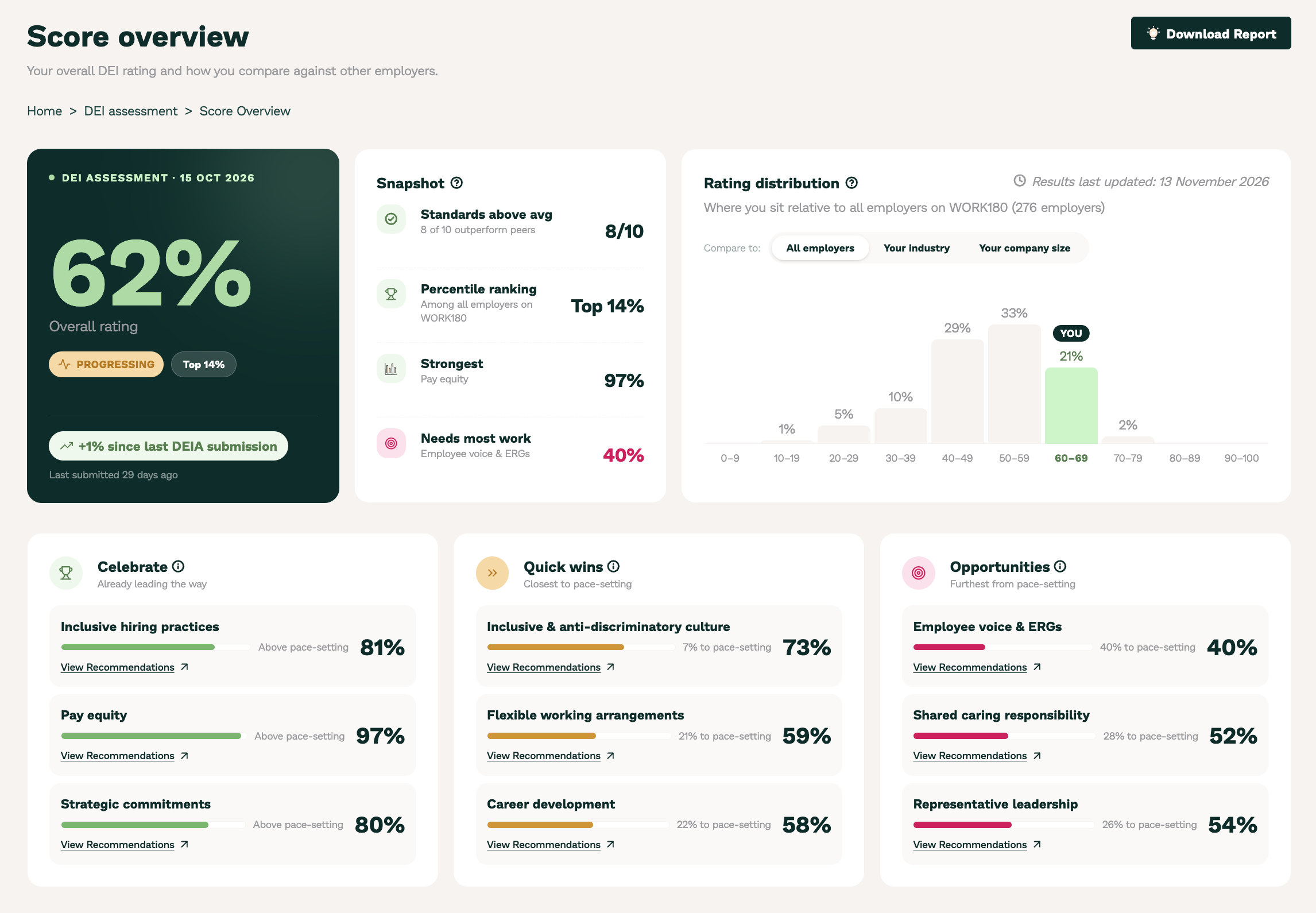
The DEIA Dashboard (diversity, equity, inclusion, and accessibility) is live now in your Progress Hub. Your overall rating, where you sit against every other Endorsed Employer, your results across all 10 standards against the WORK180 average, and what’s changed since your last submission, benchmarked by industry and company size. Brief your CEO in 30 seconds, not 40 pages.
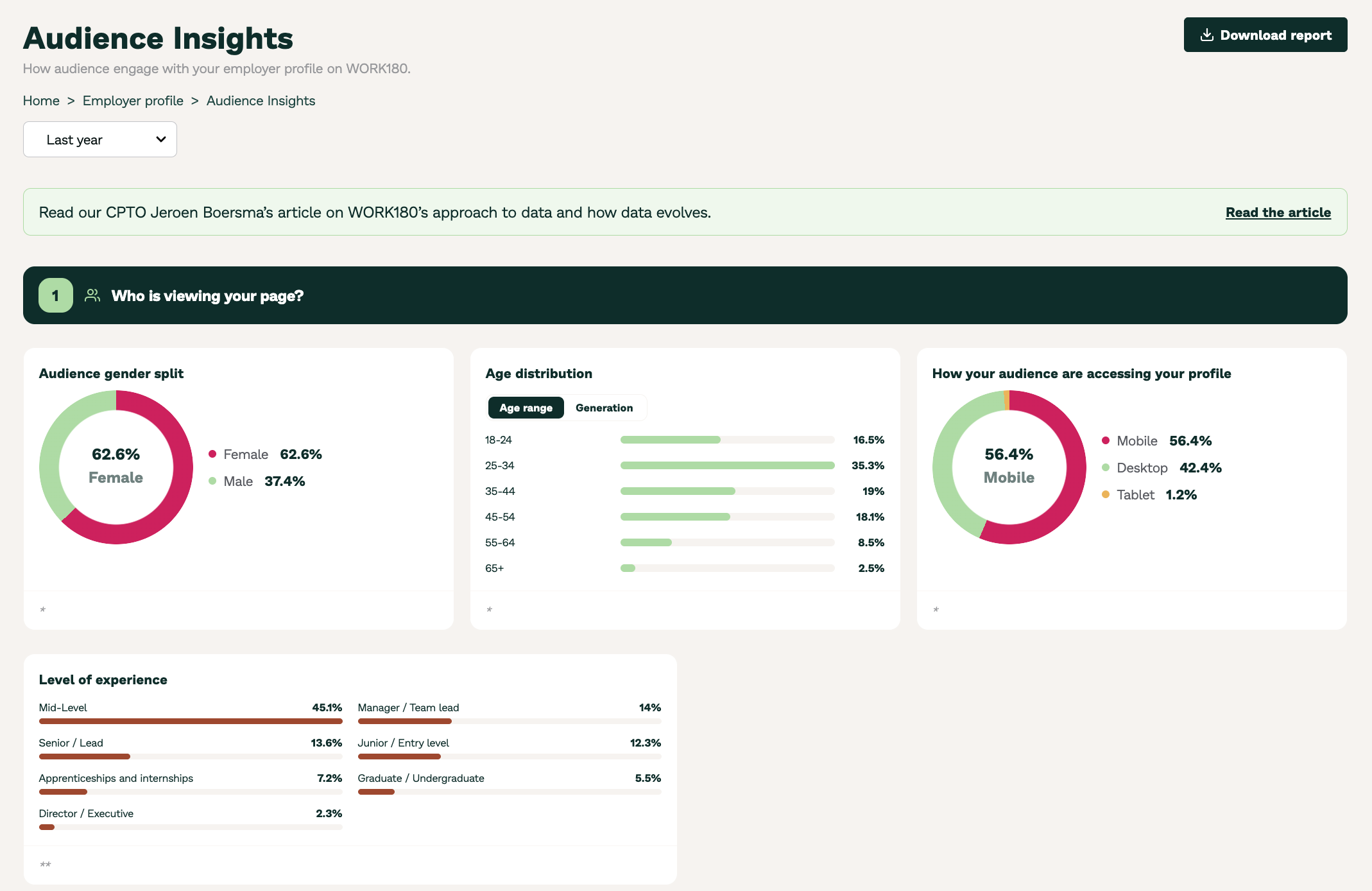
Audience Insights launches in November.
Who’s visiting your profile (in aggregate, never individuals), which jobs they look at, which benefits they click on most, and how your profile views, job views and apply clicks compare with the WORK180 average. It’s the first report we’ve built entirely based on our improved analytics.
Four questions to ask of any number
You may well face similar challenges in your own data: careers site analytics, job board reports, agency dashboards. Three questions worth asking of any reach or engagement figure you’re given:
If the answer to the fourth is no, the number isn’t doing its job.
We’ve spent the past few months asking those questions of ourselves, and we learned more than we expected. So we’re going to share it.


