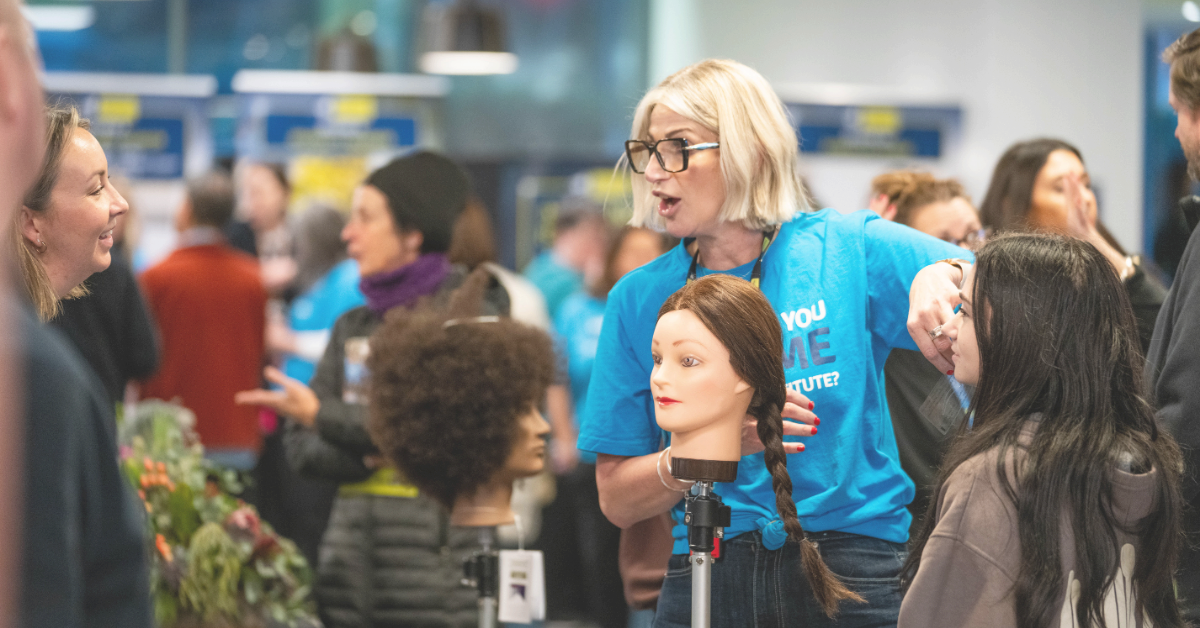
How Marisa Ganci built a career in education by following — and then leading — her passion for the creative industries.
Summary
- Marisa Ganci began her career as a hairdressing apprentice at 15 and co-owned a salon before transitioning into teaching in 2009.
- In just 18 months at Box Hill Institute, she progressed from Coordinator to Department Manager across Hair, Beauty, Hospitality, Floristry, and Celebrancy.
- Box Hill Institute’s inclusive culture, Women in Leadership program, and ongoing professional development have supported her growth at every stage.
- Her story challenges the idea that vocational pathways are somehow lesser, and makes a strong case for workplaces that actually believe in the people they hire.
There are teachers who inspire you. And then there are teachers who tell a 15-year-old girl that she’ll never amount to much, because she wants to be a hairdresser.
Marisa Ganci had the second kind. And she thinks about them often.
Not with bitterness. More with a quiet kind of satisfaction. Because today, Marisa is the Department Manager for Hair, Beauty, Hospitality, Floristry, and Celebrancy at Box Hill Institute, one of Australia’s most respected vocational education providers. She leads high-performing teams, drives student outcomes, and is currently completing a Graduate Certificate in Adult Vocational Education.
The teachers who wrote her off would, as she puts it, would not believe it if they could see her now.
A career built from the ground up
Marisa didn’t wait for someone to hand her a career. She built one.
It started at 15 with a hairdressing apprenticeship. She built real technical skill and, eventually, co-owned a salon with her sister. Running a business taught her things no classroom could: how to lead people, manage the pressure of day-to-day operations, and stay close to an industry that never stands still.
In 2009, she made a pivot that would define the next chapter. She moved into teaching.
“It has provided me with the opportunity to support student growth while working across various RTOs and continually expanding my professional capabilities. Over the years, I’ve moved from the classroom into coordination and education management roles, each one building on the last, each one requiring a different kind of leadership.”
By the time she arrived at Box Hill Institute 18 months ago, she already had a deep understanding of what vocational education could do for people. What she found there was a workplace that shared that conviction.
What belonging actually feels like
Some people describe belonging as something they had to earn. Marisa describes it as something Box Hill gave her on day one.
“From the moment I walked in the door I felt a sense of belonging. Everyone was – and still is – so welcoming. They acknowledge each other irrespective of the role they have in the institute.”
– Marisa Gancil
That last part matters more than it might sound. In large organisations, it’s easy for culture to fracture along seniority lines, where managers know managers, and everyone else quietly gets on with things. What Marisa describes is something different: a place where acknowledgement is the default, not the exception.
She joined as Coordinator for Hair and Beauty. Eight months later, she was offered the expanded role she holds now, managing not one, but five departments. That kind of progression only happens in workplaces where leaders are seen, supported, and genuinely encouraged to grow.

The investment that makes the difference
Box Hill Institute didn’t just promote Marisa. They invested in her.
She completed a Women in Leadership program through the institute. She’s currently studying for a Graduate Certificate in Adult Vocational Education. These aren’t benefits listed in small print on a job ad, they’re the kind of structured, meaningful development that tells someone their ambition is welcome here.
“I have been encouraged to build on my strengths, take on new challenges, and step into increasingly senior roles with confidence,” she says.
That confidence is visible in how she talks about her team and her students. The most rewarding part of her role, she says, is watching learners grow; seeing them arrive uncertain and leave capable. She takes pride in building the conditions that make that possible: great programs, engaged teams, professional facilities, and a culture where students feel supported enough to take risks.
It’s the same thing Box Hill gave her. She’s passing it on.

What comes next
Ask Marisa about her goals and she doesn’t name a title. She talks about becoming the best possible leader she can be; someone who supports, inspires, and gives people what they need to succeed.
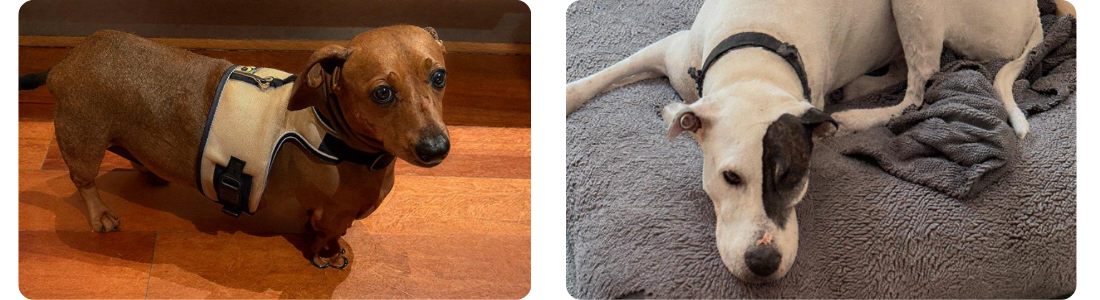
Outside of work, she’s doing what she loves: spending time with family, her dogs, travelling, camping, and cheering on the Saints (a fact she shares with obvious delight).
She is, by her own description, someone who didn’t have a lot of time for balance, but who has found a workplace where the work itself feels meaningful enough to fulfill her.
For women weighing up where to build their careers, Marisa’s story offers something more useful than inspiration. It offers evidence. Evidence that vocational pathways are serious pathways. That workplaces can genuinely support your progression, not just promise it. And that the people who told you what you were worth at 15 don’t get the final word.